Capturing the spirit of South Dakota in every gift!


Your cart is currently empty
Product image slideshow Items
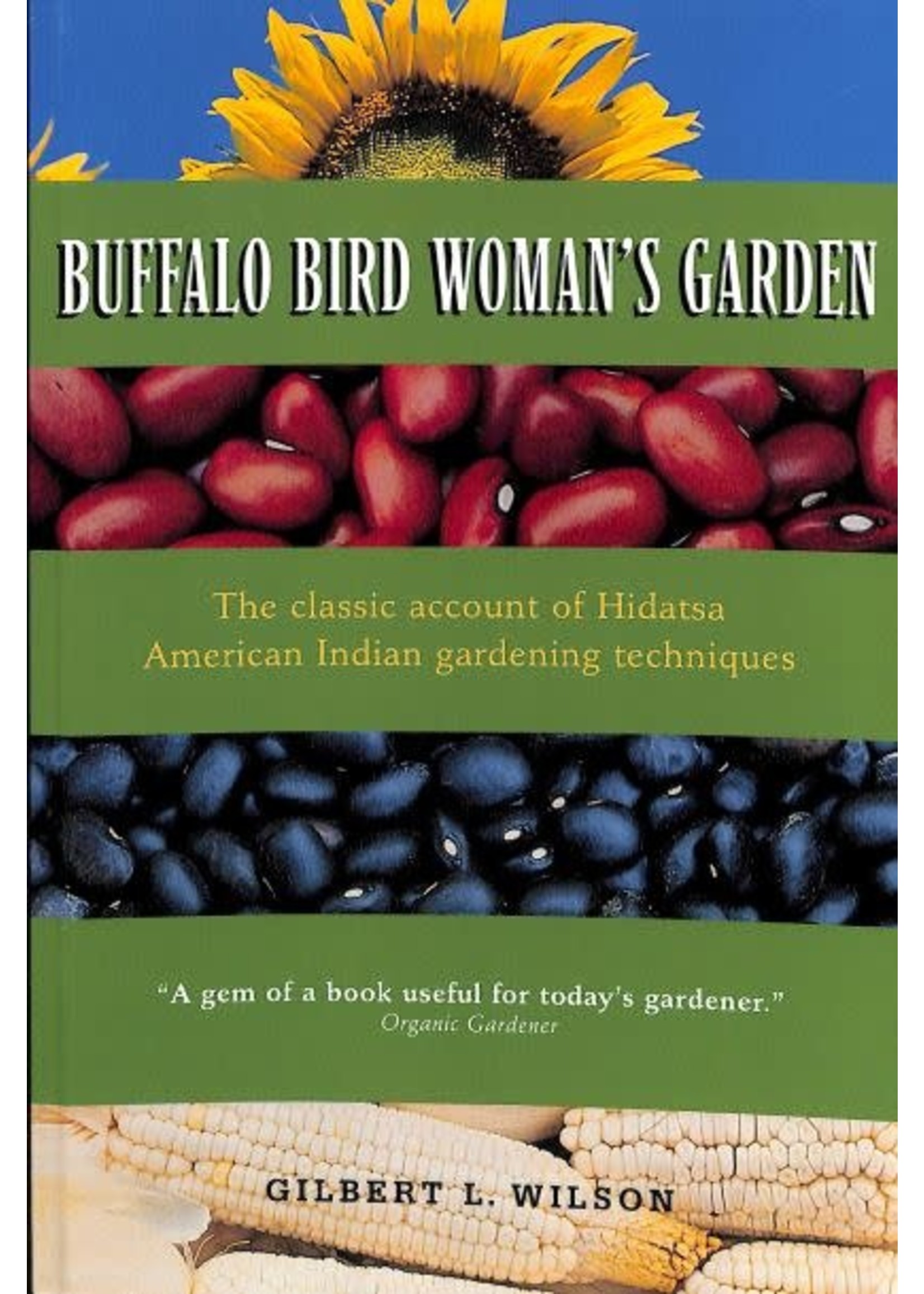
Buffalo Bird Woman's Garden: Agriculture of the Hidatsa Indians
Available in store
CloseBuffalo Bird Woman's Garden: Agriculture of the Hidatsa Indians by Gilbert L. Wilson
Buffalo Bird Woman, a Hidatsa Indian born about 1839, was an expert gardener. Following centuries-old methods, she and the women of her family raised huge crops of corn, squash, beans, and sunflowers on the rich bottomlands of the Missouri River in what is now North Dakota. When she was young, her fields were near Like-a-fishhook, the earth-lodge village that the Hidatsa shared with the Mandan and Arikara. When she grew older, the families of the three tribes moved to individual allotments on the Fort Berthold Indian Reservation.
In Buffalo Bird Woman's Garden, first published in 1917, anthropologist Gilbert L. Wilson transcribed the words of this remarkable woman, whose advice today's gardeners can still follow. She describes a year of activities, from preparing and planting the fields through cultivating, harvesting, and storing foods. She gives recipes for cooking typical Hidatsa dishes. And she tells of the stories, songs, and ceremonies that were essential to a bountiful harvest.
Paperback
129 pages
ISBN: 0873512197
About the author: Gilbert L. Wilson was an American ethnographer and a Presbyterian minister known for his extensive work with the Hidatsa people. His contributions to anthropology and ethnography are significant, particularly through his detailed documentation of Hidatsa life and culture.
Image description: The image on the cover is divided into 7 parts. The top part shows a blue sky with half a sunflower; the second part is the title in white lettering on a green background. Beneath the title there is a part with red beans, followed by the subtitle in yellow letters on a green background. The fifth part is an image of black beans followed by a part with the quote: "A gem of a book useful for today's gardener" also on a green background. The bottom part is an image of corn, the author's name is also shown in this part in black letters.